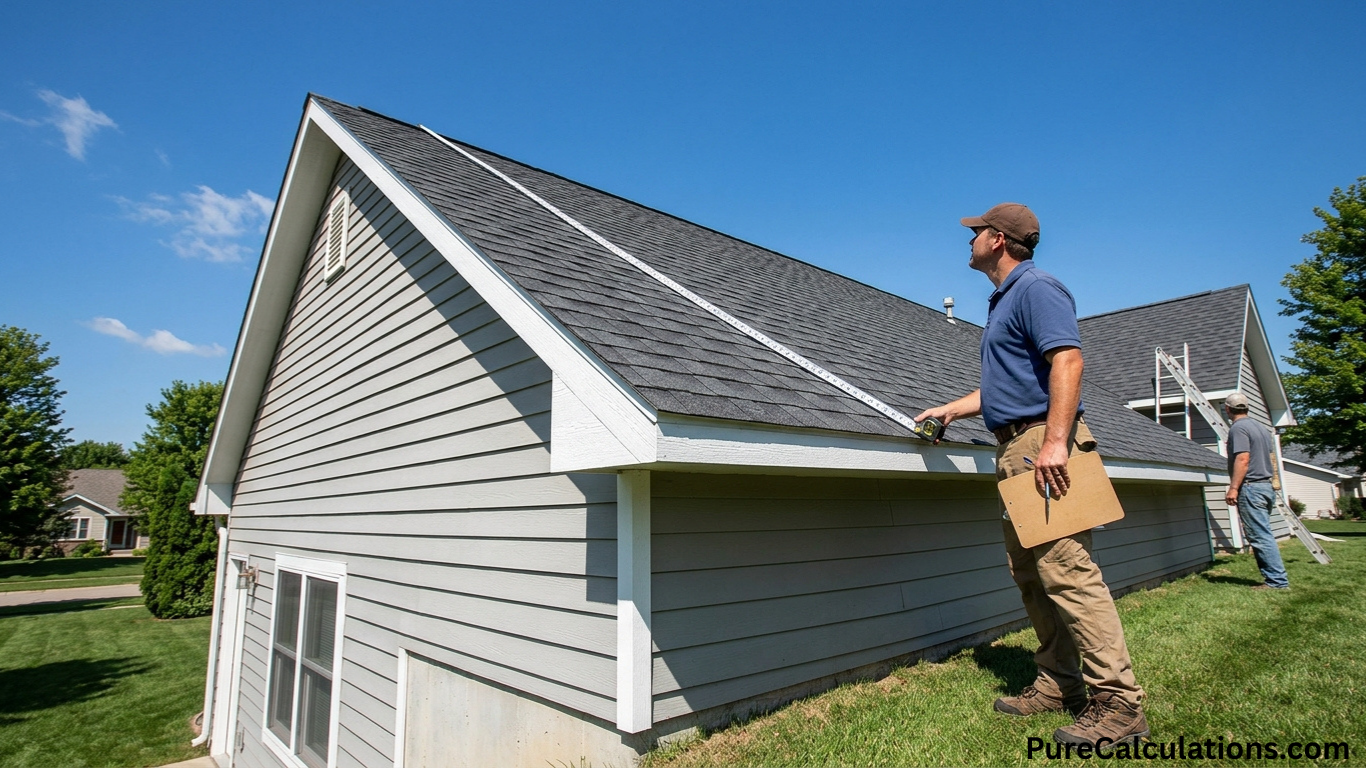
If you’ve ever stood in your driveway staring up at your roof wondering how much it would cost to replace it, you’re not alone. One of the first questions any homeowner asks a contractor—or Google—is “how do I calculate square footage of a roof?” It sounds intimidating, but honestly, it’s a lot simpler than most people think, even if your roof has a few slopes and angles thrown in.
Knowing your roof’s square footage isn’t just useful for curiosity’s sake. It directly affects how much you’ll pay for materials, labor, and even insurance estimates. Whether you’re planning a full roof replacement, patching a leak, or just budgeting for future repairs, getting this number right can save you hundreds, sometimes thousand of dollars.
In this guide, we’ll break down exactly how to measure your roof, explain the difference between roof area and roofing squares, and share a few insider tips that roofing contractors use every day.
Related Calculator to Calculate Square footage: https://purecalculations.com/square-footage-calculator/
Why Roof Square Footage Matters
Before jumping into the math, let’s talk about why this number is so important.
- Material costs: Shingles, metal panels, and underlayment are all priced by the square foot or by “roofing squares.
- Labor estimates: Contractors calculate labor charges based on total roof area and pitch.
- Insurance claims: If you’re filing a claim after storm damage, accurate measurements help ensure you’re not underpaid.
- DIY budgeting: If you’re tackling repairs yourself, knowing exact measurements prevents overbuying or running short on materials.
Getting an accurate number upfront means fewer surprises later, whether you’re hiring a professional roofing company or handling a small repair project yourself.
Understanding Roofing Squares vs. Square Footage
Here’s something that confuses a lot of homeowners: roofers don’t always talk in square feet, they talk in “squares.”
- 1 roofing square = 100 square feet
So, if your roof measures 2,400 square feet, that’s 24 roofing squares. This is important to know because most roofing material pricing, like architectural shingles or metal roofing panels is quoted per square, not per square foot. https://roofpitch.net/roof-square-footage-calculator/
Step-by-Step: How Do I Calculate Square Footage of a Roof?
Let’s get into the actual process. You can do this from the ground using your home’s footprint, or by physically measuring the roof if it’s safe and accessible.
Step 1: Measure the Length and Width of Each Roof Section
Start by measuring the length and width of every distinct roof plane. If your roof is a simple gable style, this might just be two rectangles. If you have a hip roof, dormers, or multiple angles, you’ll need to measure each section separately.
Formula for each section:
Length × Width = Area (in square feet)
Add up the areas of all sections to get your total footprint area.
Step 2: Determine Your Roof Pitch
This step trips up a lot of people, but it’s crucial. A roof isn’t flat, it has a slope, or “pitch.” The steeper the pitch, the more actual roofing material you’ll need compared to your home’s flat footprint.
You can find your roof pitch by:
- Using a pitch gauge or level and tape measure
- Checking your home’s original blueprints
- Hiring a roofer for a quick inspection
Roof pitch is expressed as a ratio, like 4:12 or 6:12, meaning the roof rises 4 or 6 inches for every 12 inches of horizontal run.
Step 3: Apply the Pitch Multiplier
Once you know your pitch, use a pitch multiplier chart to convert your flat footprint area into actual roof surface area. Here are some common multipliers:
| Roof Pitch | Multiplier |
|---|---|
| 3:12 | 1.03 |
| 4:12 | 1.054 |
| 5:12 | 1.083 |
| 6:12 | 1.118 |
| 7:12 | 1.158 |
| 8:12 | 1.202 |
| 9:12 | 1.25 |
| 10:12 | 1.302 |
Formula:
Flat Footprint Area × Pitch Multiplier = Actual Roof Area
For example, if your home’s footprint is 1,800 square feet and your pitch is 6:12, you’d multiply 1,800 by 1.118, giving you approximately 2,012 square feet of actual roofing surface.
Step 4: Add for Waste and Overhangs
Roofing materials aren’t perfectly efficient, cutting shingles around vents, chimneys, and edges creates waste. Most professionals recommend adding 10-15% extra to your total square footage to account for this.
Also, don’t forget roof overhangs (the parts that extend beyond your exterior walls). These need to be included in your measurements too, since they still require covering.
Tools That Make Roof Measuring Easier
If climbing on your roof isn’t your idea of a good time (understandable), there are some great alternatives:
- Satellite measurement tools: Services that use aerial imagery to calculate roof area remotely
- Drone measurement services: Increasingly popular for accurate, safe roof assessments
- Roofing calculator apps: Many contractors use apps that combine pitch, footprint, and waste calculations automatically
These tools are especially helpful if you’re comparing quotes from multiple roofing contractors and want to double-check their numbers. https://www.calculator.net/roofing-calculator.html
Common Mistakes to Avoid
- Forgetting pitch adjustments: Using only your home’s footprint without factoring in slope leads to underestimating material needs.
- Ignoring overhangs and eaves: These add extra square footage that’s easy to overlook.
- Not accounting for waste: Skipping the 10-15% buffer often leads to running short mid-project.
- Measuring an unsafe roof yourself: If your roof is steep or high, it’s safer (and often more accurate) to hire a professional.
Final Thoughts
So, how do I calculate square footage of a roof? At its core, it comes down to measuring your home’s footprint, adjusting for pitch, and adding a buffer for waste. While the math might seem like a lot at first, breaking it into these simple steps makes the whole process manageable, even for homeowners with zero construction experience.
Whether you’re planning a DIY repair or getting quotes from local roofing companies, having a solid grasp of your roof’s true square footage puts you in a much stronger position. You’ll be able to spot inaccurate estimates, budget more confidently, and avoid unpleasant surprises when the final bill arrives.
If you found this guide helpful, feel free to share it with a friend who’s tackling a roofing project, or leave a comment below with any questions. Every roof is a little different, and we’re happy to help you figure out the details.
FAQs
1. How do I calculate square footage of a roof without climbing on it?
You can measure your home’s footprint from the ground, estimate the pitch using a level and tape measure, or use satellite/drone measurement tools for a safer, remote option.
2. What’s the difference between roof square footage and roofing squares?
One roofing square equals 100 square feet. Contractors often quote pricing per square, so it’s helpful to convert your total square footage into squares when comparing estimates.
3. Do I need to include roof overhangs in my calculations?
Yes. Overhangs extend beyond your home’s exterior walls but still need to be covered, so they should be included in your total measurements.
4. How much extra material should I budget for waste?
Most professionals recommend adding 10-15% extra to account for cuts, trimming, and waste around vents, chimneys, and edges.
5. Can I trust online roofing calculators for accurate measurements?
Online calculators and apps are helpful for quick estimates, but for major projects or insurance claims, it’s best to confirm measurements with a professional roofer or licensed inspector.